
Investigating the Technical Challenges and Innovation Milestones in the Global Wearable Display Market Sector
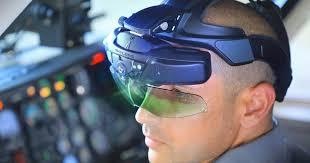
Developing a screen that can be worn on the body involves overcoming significant thermal management and power efficiency hurdles. In many technical discussion groups, engineers highlight the difficulty of preventing heat buildup in devices that are in direct contact with human skin. As display resolutions increase to accommodate more complex data, the processors required to drive these pixels generate more heat, necessitating creative cooling solutions or more efficient display materials. OLED technology has been a savior in this regard, as it does not require a constant backlight, but the quest for even higher efficiency continues with the development of Gallium Nitride based micro-LEDs. These components offer the promise of extreme brightness and longevity, which is essential for devices that are used outdoors for extended periods. The dialogue in the industry is currently centered on how to scale the manufacturing of these tiny LEDs while keeping production costs low enough for the mass market.
From a commercial perspective, the ability to track user engagement through eye-tracking sensors integrated into the display is opening new avenues for personalized content delivery. This is particularly relevant in the gaming and advertising sectors, where the display becomes a two-way street for data exchange. For those tracking the financial and competitive landscape, Wearable Display Market research provides essential insights into how mergers and acquisitions are shaping the future of display technology. As large tech conglomerates acquire smaller startups specializing in waveguide optics or micro-displays, the pace of innovation is likely to accelerate. The end goal is a device that feels as natural as a pair of spectacles or a traditional leather-strap watch but possesses the computing power of a workstation. Achieving this requires a holistic approach to design, where the display is not just a component but the core around which the entire user experience is built.
What is the benefit of using OLED over LCD in wearable devices? OLEDs provide better contrast ratios, faster response times, and are generally thinner and more power-efficient since they do not require a separate backlighting unit.
Will holographic displays become a reality for consumers soon? While experimental prototypes exist, widespread consumer adoption of holographic wearable displays is still several years away due to challenges in light diffraction and hardware size.
➤➤➤Explore MRFR’s Related Ongoing Coverage In Semiconductor Industry:
Wearable Payment Device Market
Restaurant Delivery Robot Market

 English
 French